Sub-level pest intrusions beneath Kent County properties commonly originate from elevated ground moisture combined with exterior crawlspace vents that lack 1/4-inch hardware cloth. In neighborhoods like Moores Lake…
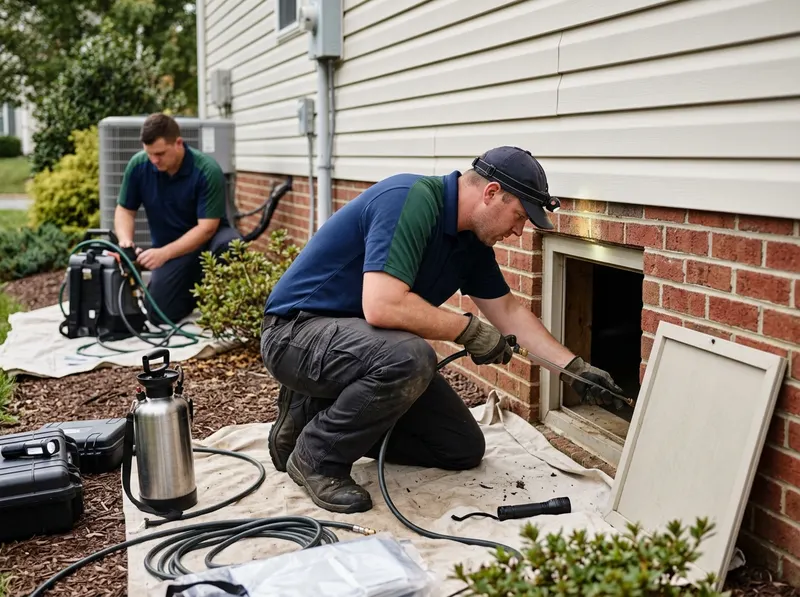
Sub-level pest intrusions beneath Kent County properties commonly originate from elevated ground moisture combined with exterior crawlspace vents that lack 1/4-inch hardware cloth. In neighborhoods like Moores Lake District and Willow Run, high water tables pull damp air upward through foundation vents, softening wooden floor joists and creating harborages for mice, Norway rats, and moisture-seeking camel crickets. When rodents nest within subfloor fiberglass insulation, their urine, fecal pellets, and dander disintegrate into particulate matter. Because up to 50% of the air on a home's first floor is drawn directly upward from the foundation through the natural stack effect, unaddressed crawlspace contamination continually cycles bio-aerosols into the central living space.
A complete crawlspace decontamination differs substantially from a basic perimeter chemical barrier or superficial rodent bait placement. A basic extermination kills active pests but leaves biological contamination, pheromone trails, and contaminated materials untouched beneath the living quarters. Full decontamination physically extracts shredded batting, removes compromised 6-mil polyethylene vapor barriers, and deploys commercial-grade HEPA extraction vacuums capable of trapping particulates down to 0.3 microns. If an infestation is localized to an access hatch near Meadowbrook Acres or Quaker Hill, targeted spot sanitation paired with mechanical exclusion may resolve the issue; however, if rodent pathways extend across multiple foundation piers or into structural sill plates, complete insulation extraction and floor-joist antimicrobial fogging are required to prevent re-infestation.
Remediation follows a strict sequence: technicians seal exterior breach points using non-corrosive copper mesh and structural sealants, mechanically extract bulk droppings and nesting material, mist exposed joists with EPA-registered botanical or quaternary ammonium sanitizers, and roll out fresh heavy-duty moisture barriers. In Briar Park and Derby Run, homes bordering irrigation channels or older tree lines frequently show pest trails along foundation footing edges. Property owners balance the upfront cost of full insulation replacement against the trade-off of maintaining compromised thermal R-values; stripping soiled R-19 fiberglass and delaying re-insulation until the subfloor dries to below 15% wood moisture equivalent prevents trapping latent dampness against the floorboards. For low-clearance spaces under 18 inches, work requires trenching access lanes to clear structural obstructions safely without disrupting plumbing runs or electrical conduits.
Every job gets a firm, written price after a free on-site visit.
Tell us about your crawlspace pest decontamination job in Denver and we'll send a clear, written quote, usually the same day.
 Zandora Pest Elimination